Enshitification happens when good brands ruin themselves solely for financial gain.
Enshitification is the ultimate in short-sighted strategies.
You may not know the term yet, but you’ve likely experienced enshitification in the real world, and it sucks.
Here’s an example: you pay for Amazon Prime. You get access to all sorts of stuff, faster shipping, videos, etc. It was cool you paid a little extra to cut the crap and have a better experience. Now, Amazon now takes ad money from brands, on top of your Prime subscription, and forces us to watch commercials (remember, part of the Prime value was a commercial-free experience), all to squeeze out more profit while making the product ‘shittier.’
RIP Etsy
My latest experience with enshitification is with Etsy. RIP Etsy. Etsy used to be a marketplace for makers. You could go there and shop for a lot of things that were maker-made, supporting small businesses and entrepreneurs, while avoiding Amazon and the other heartless, fully ensitified retailers.
That’s no longer the case. I don’t have specifics on timing, but Etsy recently decided profit was more important than anything else. Sellers can now masquerade as ‘makers’ and resell crap they buy post-sale, then ship it to you as if they made it themselves, with a significant markup on wares they buy from Temu, Amazon, or AliExpress. That’s shitty.
My point isn’t to rant about a corporation’s choices. I am disappointed in what they decided was best, but the decision to destroy a well-known and well-loved brand just to eke out a little more profit—and to let sellers deceive and take advantage of your customers—is insane. Your brand is your reputation, and they decided the brand is worth destroying for short-term revenue. They ignore the long-term damage they’re causing, damage that will limit future revenue. How valuable is money now, when you risk money later?
The Multiplier Effect
You may be thinking, what’s the harm in one person’s bad experience? Well, according to the Multiplier Effect, people naturally share bad brand experiences far more often—and without being prompted. Case in point, I’m writing this article. When I came to this realization about Etsy (the red flag was the delivery window changed twice and was weeks out from my order, which made me skeptical), I reverse image-searched my order and found the exact product on AliExpress for half the price, same photos and all, and canceled it. I told several people about my negative experience. They generally replied with, “Yeah, I noticed that myself,” or “Etsy is dead.”
Back to my recent article, where I blow up the fallacy of “the ‘brand’ sells itself,” people are not likely to evangelize about a great experience with a brand, but they do remember how it made them feel. And when prompted, we do speak well of the brand if our experiences were good, but when they are not good, we tell everyone who will listen.
Optimization of Aspirations
Here’s the relevance to you, dear reader. Brand strategy and development are not short-term efforts. They don’t fit into a “project” package, nor are they marketing activities. Successfully growing brands is an ongoing effort of daily Optimization of Aspirations™. Optimizing your brand aspirations is the act of working towards the vision set for your company. We don’t want to spend our time trying to align perception and reality; our work must focus on the future state: earning the reputation and status you desire. Etsy did this for years, and so did Amazon—right up until they decided to become just another crappy online retailer in a crowded category of shitty online retailers. Even Jim Collins alludes to the importance of vision setting through brand strategy work in Good to Great.
Do you think Etsy built any real vision into their decision to enshitify the product? Doubtful, outside of maximizing profit, then destroy it forever. Trust me, they’re only looking at line items now and that is what led to their self-caused destruction. As a leader, you face the same crossroads now. Which path are you going to choose: short-term revenue at the expense of long-term sustainability, or following your vision and leading the brand to a successful, scalable, and sustainable future?
Even if you don’t believe me, that’s cool. But first, look at enshitifcation through the marketing lens. How do you market a brand that broke its promise to its customers, where established trust was easily broken for profit? I don’t see how any marketer can take the soulless husk that was once the great Etsy and say, “Yeah, we can build new relationships with customers while the brand happily allows enables sellers to deceive customers, and once the customer finds out, they will be pissed.”
Feed Your Mind
What I’m Listening To:
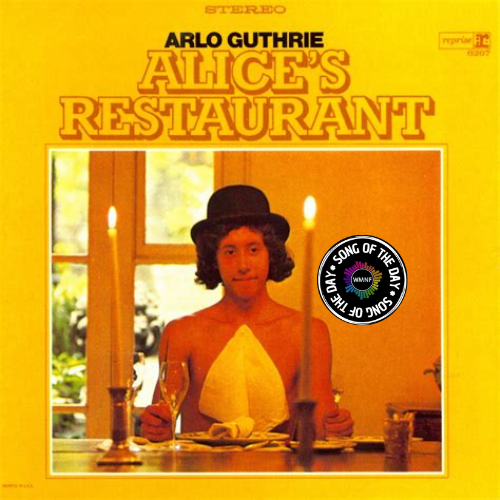
I hit the hardcore punk jams a bunch last week: Descendents, Black Flag, IDLES, Buzzcocks, and Iggy Pop, mostly, with PIL and Citizen Cope mixed in while on a road trip. The Thanksgiving transition lives on with a family listening of Alice’s Restaurant by Arlo Guthrie. Do you have any non-xmas listening traditions?
What I’m Reading:
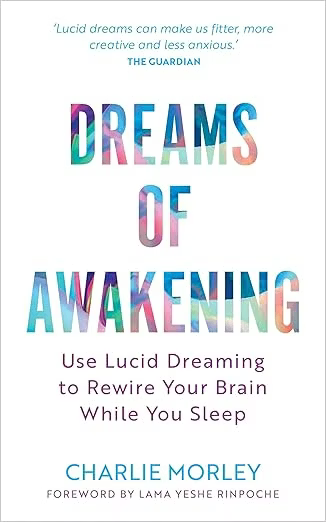
Dreams of Awakening: Use Lucid Dreaming to Rewire Your Brain While You Sleep by Charlie Morley
Ever since I was a teenager, dreams have fascinated me. Maybe it’s because I have super vivid dreams and have experienced more than a few lucid ones over the years. When I was in LA recently, my friend and colleague Michaela Wilson told me to pick this up. So far, the book has me enthralled. I know most of us want better sleep, and my work with Aires shows how much better sleep unites all of us (who doesn’t want better sleep?). But pairing better sleep with inner-child work keeps me turning page after page in this fascinating book. I’ll report back as I move through the text and my experiments with lucid dreaming.
What’s your experience with vivid and lucid dreaming?
I remember one dream I had over and over as a kid, a dream that eventually became a regular lucid dream. My parents left me alone in the house while they walked out with both my brother and sister (I’m the middle child). I ran to the pitch-black basement. The shadows reached out, grabbed me, and twisted me up like I was Gumby. Eventually, I realized I was dreaming and started altering the dream however I wanted, which ended the terror of being left alone and attacked by monsters. I still had the dream from time to time, but I recognized it right away and played it out like a script, knowing exactly what would happen, and the fear and lack of control flipped into excitement.